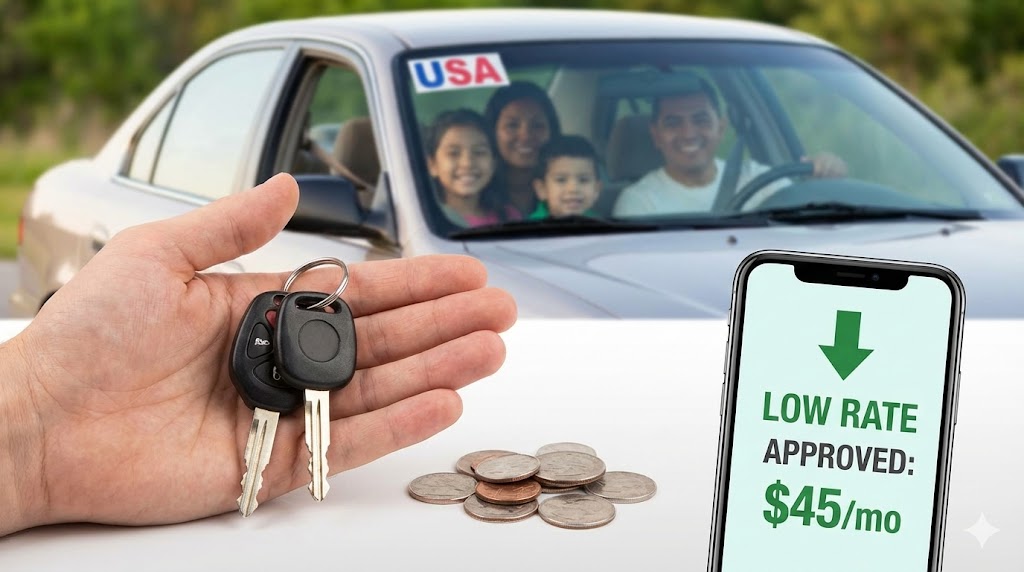
For millions of American families living paycheck to paycheck, a single car insurance bill can mean the difference between buying groceries or keeping the lights on. Yet, driving without insurance is a gamble that can lead to license suspension, massive fines, or financial ruin.
Finding cheap car insurance quotes when you are on a tight budget isn’t just about saving a few dollars—it is about survival.
If you are struggling to afford premiums, you are not out of options. From little-known government-sponsored programs to specific strategies for lowering your rates, this guide covers everything you need to know to secure affordable auto insurance in 2026.
Why Is Car Insurance So Expensive for Low-Income Drivers?
Before we dive into the solutions, it is crucial to understand why your rates might be high. Insurance companies use complex algorithms to determine risk. Unfortunately, many of the factors they score correlate with income level.
- Credit Score: In most states, insurers use your credit history to predict your likelihood of filing a claim. Lower credit scores often result in significantly higher premiums.
- Zip Code: Living in densely populated urban areas or neighborhoods with higher crime rates can spike your insurance costs.
- Lapse in Coverage: If you have missed payments and let your policy lapse in the past, insurers view you as “high-risk.”
However, you can beat these algorithms. Let’s look at the best low-income car insurance options available right now.
Government-Sponsored Low-Income Car Insurance Programs
Did you know that some states offer government-subsidized insurance specifically for low-income residents? These programs are the “gold standard” for affordability if you qualify.
1. California Low Cost Automobile (CLCA) Insurance
California has one of the most robust programs in the nation. The California Low Cost Automobile (CLCA) program is designed for good drivers who meet income eligibility requirements.
- Cost: Rates can be as low as $200 to $921 per year, depending on your county.
- Coverage: It meets the state’s liability laws. As of 2025, coverage limits have adjusted to keep up with inflation (typically 30/60/15 limits).
- Eligibility: You must have a valid driver’s license, a vehicle worth less than $25,000, and meet household income caps (e.g., typically under 250% of the federal poverty level).
2. New Jersey Special Automobile Insurance Policy (SAIP)
Often called the “Dollar-a-Day” insurance, this policy is a lifesaver for those eligible for Medicaid.
- Cost: Approximately $365 per year (hence, a dollar a day).
- Coverage: This is a medical-only policy. It covers emergency treatment if you are injured in an accident. Warning: It does not cover damage to other people’s cars (liability) or your own car. It keeps you legal but leaves you with financial exposure.
- Eligibility: You must be currently enrolled in federal Medicaid with hospitalization.
3. Hawaii’s Low-Income Assistance
Hawaii takes a different approach. Because the state requires insurers to provide free no-fault insurance to those receiving public assistance (like SSI or financial aid), many low-income drivers can get basic coverage at little to no cost.
Best Private Car Insurance Companies for Tight Budgets
If you do not live in CA, NJ, or HI, you will need to shop in the private market. However, not all insurers are created equal. Based on average annual premiums for minimum coverage, these are the top contenders for cheap liability car insurance.
Geico
Geico is frequently the low-price leader for state minimum coverage. Their digital-first model keeps overhead low, which translates to savings for you.
- Why it works: They offer massive discounts for federal employees and military members, but their standard rates for drivers with “fair” credit are often lower than competitors.
State Farm
While known for great service, State Farm is surprisingly competitive for young drivers and families.
- Why it works: They are more forgiving of credit incidents than others. If you have a teen driver in the house, their “Steer Clear” program can reduce rates by up to 15-20%.
CURE Auto Insurance
Operating primarily in New Jersey, Pennsylvania, and Michigan, CURE is a unique “income-blind” insurer.
- Why it works: CURE determines rates based mostly on your driving record, ignoring your credit score, education level, or occupation. This is a game-changer for low-income drivers with clean driving records but poor credit.
The General / SafeAuto
These companies specialize in “high-risk” drivers.
- Why it works: If you have a DUI, tickets, or a lapsed policy, major carriers might deny you. These companies will insure you, though often at a higher rate. Use them as a stepping stone to get back on track, then switch to a cheaper carrier once your record improves.
5 Proven Strategies to Lower Your Premium Immediately
If you can’t access a government program, use these tactics to slash your bill.
1. Drop to “State Minimum” Liability
If your car is paid off (not leased or financed), you are not required to carry Comprehensive and Collision coverage.
- The Hack: Dropping “full coverage” can reduce your bill by 50% or more.
- The Risk: If you crash your car, you have to pay for your own repairs. This is usually the best move if your car is worth less than $4,000.
2. Raise Your Deductible
If you must keep full coverage, raise your deductible from $500 to $1,000.
- The Result: This can lower your monthly premium by 15% to 30%. Just ensure you have access to $1,000 in an emergency.
3. Leverage “Usage-Based” Insurance (Telematics)
Programs like Progressive’s Snapshot, Allstate’s Drivewise, or State Farm’s Drive Safe & Save track your driving via a mobile app.
- The Benefit: If you drive safely (no hard braking, no late-night driving), you can earn discounts of up to 30%.
- Ideal For: Low-income workers who don’t have long commutes.
4. Bundle Renters and Auto
Even if you don’t own a home, you likely rent. Renters insurance is incredibly cheap (often $15/month).
- The Math: Buying renters insurance from your auto insurer can trigger a “Multi-Policy Discount” on your car insurance that is often larger than the cost of the renters insurance itself. You essentially get free renters insurance and a lower car bill.
5. Ask for Hidden Discounts
Insurers rarely advertise every discount. When you call for auto insurance quotes, explicitly ask about:
- Paperless billing discount (usually small, but easy).
- Early signing discount (for buying a policy 7 days before it starts).
- Multi-car discount (if your household has two beaters, insure them together).
Non-Owner Car Insurance: The Cheapest Legal Option
Do you borrow a friend’s or relative’s car to get to work but don’t own one yourself? You still need insurance to drive legally in many states.
Non-owner car insurance provides liability coverage for you when you drive a vehicle you don’t own.
- Cost: It is significantly cheaper than standard insurance because insurers assume you drive less frequent.
- Advantage: It prevents a “lapse in coverage” on your record. Maintaining continuous insurance (even non-owner) builds your insurance score, making standard insurance cheaper when you eventually buy a car.
Frequently Asked Questions (FAQ)
Which car insurance is best for low income?
For most states, Geico and State Farm offer the most competitive rates for minimum liability coverage. If you live in California, the CLCA program is the absolute best option. In New Jersey, look into the SAIP (Dollar-a-Day) program.
How can I get car insurance with no money down?
Be careful with “no deposit” searches. Most reputable insurers require at least the first month’s payment upfront. However, companies like The General and SafeAuto often offer very low down payments (e.g., $20 or $30) to start the policy.
Is it cheaper to put insurance in a parent’s name?
Yes, usually. If you live at the same address, being added as a driver to a parent’s policy is much cheaper than buying a standalone policy, especially for drivers under 25.
Does credit score really affect car insurance rates?
In most states (except CA, HI, MA, and MI), yes. A poor credit score can double your premium compared to someone with excellent credit. This is why “income-blind” insurers like CURE are valuable for low-income families.
What is the cheapest state for car insurance?
Currently, states like Maine, Ohio, and Idaho have some of the lowest average premiums in the USA due to lower population density and fewer accidents.
Conclusion: Don’t Drive Uninsured
Driving without insurance is a financial trap that can keep a low-income family in debt for years. A single accident could lead to wage garnishment or lawsuits.
Take action today:
- Check if your state (CA, NJ, HI) offers a government subsidy.
- Get at least 3 quotes online for “state minimum liability.”
- Ask about telematics and bundling to shave off that extra 20%.
You can find cheap car insurance quotes if you are willing to shop around and adjust your coverage. Start your search now and protect your financial future.