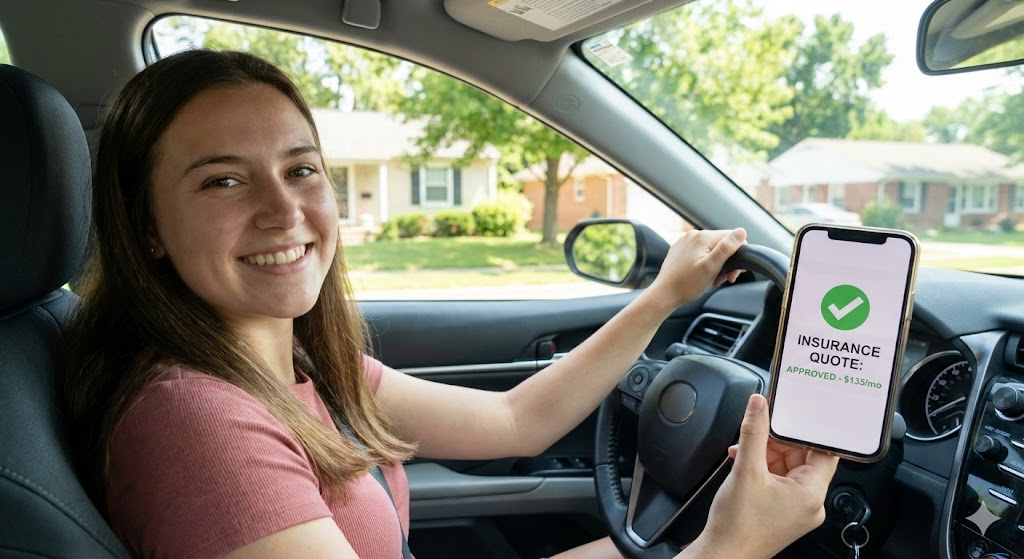
Finding affordable car insurance as a first-time driver in the USA can feel like navigating a maze without a map. If you are a new driver—or the parent of one—you have likely noticed that premiums are significantly higher than average. Insurance companies view inexperienced drivers as “high-risk,” which often translates to sticker shock when you see your first quote.
However, high rates are not inevitable. With the right strategy, you can secure cheap car insurance for new drivers without sacrificing essential coverage. This guide explores the best car insurance quotes currently available, reviews the top carriers for 2025/2026, and provides actionable tips to lower your premiums immediately.
Why First-Time Driver Insurance Is So Expensive
Before diving into the best companies, it helps to understand the pricing model. Insurance providers use statistical data to determine rates. Unfortunately for beginners, data shows that new drivers—especially teenagers—are more likely to be involved in accidents.
According to recent industry reports, an 18-year-old on their own policy may pay an average of $599 per month for full coverage. That is a steep price, but it varies wildly depending on your location, vehicle type, and credit history. The key to beating these odds is knowing where to look and how to structure your policy.
Top Car Insurance Companies for First-Time Drivers
We analyzed market data, customer satisfaction ratings, and premium affordability to identify the top contenders for best auto insurance for new drivers.
1. State Farm
Best Overall for Students and Teens
State Farm consistently ranks as one of the most affordable options for young drivers. They are particularly famous for their “Steer Clear” driver safety program, which is designed specifically for drivers under 25. Completing this program can yield significant discounts.
- Pros: widely available agents, excellent student discounts, competitive rates for adding a teen to a parent’s policy.
- Cons: Online quoting process can sometimes require agent follow-up.
2. GEICO
Best for Low Rates and Digital Experience
If you prefer managing everything from an app, GEICO is a powerhouse. They are aggressive with online car insurance quotes, often undercutting competitors on price for liability-only policies.
- Pros: superb mobile app, “Good Student” discounts, fast claims processing.
- Cons: Customer service is largely digital; fewer local agents.
3. Progressive
Best for High-Risk and Usage-Based Savings
Progressive is a pioneer in telematics with their “Snapshot” program. If you are a careful new driver, you can prove it by plugging a device into your car or using their app. Safe driving habits can lead to lower rates than standard actuarial tables would predict.
- Pros: “Name Your Price” tool helps fit insurance into a budget, great for drivers with a spotty starting record.
- Cons: Snapshot can technically raise your rates if you drive poorly (e.g., hard braking).
4. USAA
Best for Military Families
If you or your parents have served in the military, USAA is almost always the unbeatable winner. Their customer service scores are legendary, and their premiums for young drivers are typically the lowest in the industry.
- Pros: unmatched customer loyalty, cheapest rates for eligible members.
- Cons: Strict eligibility requirements (military connection required).
5. Erie Insurance
Best Regional Option
For those living in the Mid-Atlantic or Midwest, Erie Insurance offers “rate lock” features where your premium doesn’t go up unless you change your car, address, or drivers. This stability is gold for young drivers.
- Pros: Personalized service, Rate Lock feature.
- Cons: Limited availability (only in 12 states).
How to Get the Best Car Insurance Quotes
Getting a quote is easy; getting the best quote requires a few extra steps. Do not settle for the first price you see.
Step 1: Compare Multiple Quotes Online
Use comparison tools to get auto insurance quotes online from at least three different carriers. Rates can vary by hundreds of dollars for the exact same coverage. When you search for “free car insurance quotes,” ensure you are entering the same coverage limits for each company to get an “apples-to-apples” comparison.
Step 2: Decide Between Full Coverage vs. Liability
If you are driving an older, used car (a “beater”), you might not need comprehensive and collision coverage. Dropping these can cut your bill in half. However, if your car is financed or leased, your lender will likely require full coverage car insurance.
- Liability Insurance: Pays for damage you cause to others. Required by law.
- Full Coverage: Includes collision (repairs to your car) and comprehensive (theft, weather, vandalism).
Step 3: Bundle Your Policies
If you rent an apartment, look for renters insurance. Bundling auto and renters insurance with the same company is one of the easiest ways to trigger a “multi-policy discount,” often saving you 5-15%.
Vital Discounts for New Drivers
Never pay full price without asking about discounts. Insurance companies offer specific price breaks that often go unadvertised.
Good Student Discount
If you are a student with a “B” average (3.0 GPA) or higher, you can save up to 25% with major carriers like State Farm and Geico. You will need to provide a transcript or report card as proof.
Defensive Driving Courses
Taking an accredited defensive driving course shows insurers you are serious about safety. In states like New York and Georgia, this can mandate a discount by law.
Telematics Programs
Programs like Allstate’s “Drivewise” or Progressive’s “Snapshot” track your driving in real-time. If you avoid late-night driving and hard braking, you can earn substantial rewards.
Student Away at School
If you go to college more than 100 miles away from home and leave your car behind, parents can ask for the “student away at school” discount. You stay insured for when you visit home, but the premiums drop drastically.
Coverage Checklist: What Do You Actually Need?
When filling out quote forms, you will be bombarded with options. Here is a quick cheat sheet for first-time drivers:
- Bodily Injury Liability: Recommended: $100k/$300k. Do not stick to state minimums if you can afford more; medical bills from an accident can easily bankrupt you otherwise.
- Property Damage Liability: Recommended: $50k. This pays for the other person’s car. With modern car prices, the state minimum of $10k or $25k is rarely enough.
- Uninsured/Underinsured Motorist: Essential. This protects you if you are hit by a driver who has no insurance.
- Collision/Comprehensive: Optional. Keep this if your car is worth more than $4,000. If your car is worth less, the premiums might exceed the payout value.
Frequently Asked Questions (FAQ)
What is the cheapest car insurance for 18-year-old drivers?
Based on national averages for 2025, State Farm and Erie Insurance often provide the lowest rates for 18-year-olds. However, staying on a parent’s policy is almost always cheaper than buying a separate individual policy.
How can I lower my car insurance as a new driver?
To lower your premium: maintain a high GPA for student discounts, drive a safe/older car (avoid sports cars), take a defensive driving course, and agree to usage-based tracking (telematics).
Is it cheaper to be on my parents’ policy?
Yes, significantly. Adding a teen driver to a parent’s existing policy is typically 40-60% cheaper than the teen taking out their own separate policy.
Does the type of car affect insurance rates?
Absolutely. Insurers look at “loss history” for vehicles. Sports cars, luxury vehicles, and cars with high theft rates (like certain Kia or Hyundai models) will cost much more to insure. A sensible sedan or compact SUV is usually the most budget-friendly choice.
What is the difference between specific and non-owner car insurance?
If you borrow cars frequently but do not own one, non-owner car insurance provides liability coverage for you when driving a vehicle owned by someone else. This is a great way to build a continuous insurance history without owning a car.
Conclusion
Securing the best car insurance quotes as a first-time driver requires patience and smart shopping. While the costs are higher for beginners, leveraging good student discounts, choosing the right vehicle, and comparing auto insurance rates from top providers like State Farm and Geico can save you thousands of dollars a year.
Remember, your first quote is just a starting point. As you build a clean driving record, your rates will drop. Start by getting at least three online quotes today to ensure you are not overpaying for your freedom on the road.